The Thirstiest Tank Sets the Pace: Fuel Planning for Mixed-Range Club Runs
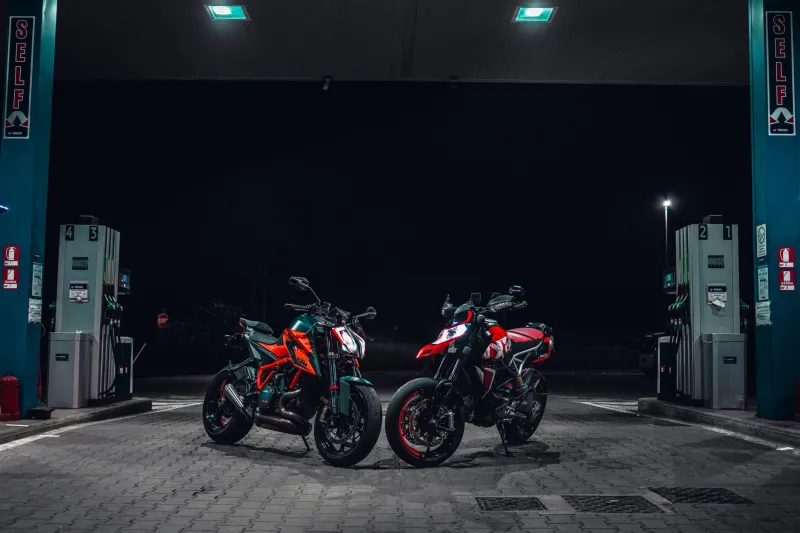
There’s a particular silence that falls over a club run when a reserve light comes on. It’s not the comfortable quiet of a good lane; it’s the quiet of six riders doing mental arithmetic about the next forecourt. The rider in front is scanning for a sign, the rider behind is trying to remember whether the last village had a pump, and the route leader is quietly recalculating everything. Fuel is the least glamorous part of ride planning, and the one most likely to turn a decent Sunday into a card-only pump crawl. The fix isn’t complicated. It just needs to happen before the side stands go up.
Work out the worst-case range, not the brochure figure
Every bike has a fuel range on paper and a fuel range in real life. The gap between them is where club runs get interesting. A tank that theoretically covers 180 miles might comfortably do 140 with a heavy rider, a top box, a headwind and a chilly morning. Another bike might be sweating at 90 because its reserve is small and its rider likes to make progress. Before the route is finalised, ask each rider for a realistic figure: not the best they’ve ever managed, but the distance they’d be happy to repeat on a wet Tuesday with a full tank.
That number should include a margin. If someone says they can do 120 miles to reserve, treat 90 as their practical limit. The reserve light is not a planning tool; it’s a warning that the planning has already failed. A club run shouldn’t rely on anyone running into reserve, even if they’re confident. The aim is to stop with fuel in the tank and time in hand.
The smallest tank writes the route
Once you know the worst-case range in the group, that bike sets the pace for fuel stops. It’s tempting to plan around the biggest tank because it’s easier, but that just pushes the problem down the road. If the shortest range is 90 miles, plan your first stop at 60 or 70. That might feel early to the rider on a 200-mile tank, but it keeps the group together and removes the need for a splinter group later. The thirstiest tank isn’t a problem to be managed; it’s the planning constraint that makes the day work.
This also means the route shouldn’t be built around fuel stops that only suit one bike. A stop every 70 miles is not a failure of ambition. It’s a chance to stretch, check the map, and make sure everyone is still having a good time. On a North Downs run, that might mean a forecourt on the A25 rather than a scenic detour to a rural pump that closes at lunchtime.
Pick forecourts that work for a pack
Not every filling station is a club stop. A tiny village pump with two hoses and an awkward entrance is fine for a solo rider; it’s a nightmare for eight bikes. Look for stations with space to pull in and out without blocking the road, a decent forecourt, and a shop that can handle a queue of riders in helmets. Pay-at-pump is useful, but don’t assume it will work for everyone. Some riders prefer to pay inside, some cards won’t work at the pump, and some rural stations are cash-only or card-only depending on the day.
Check opening hours, especially on Sundays and bank holidays. A forecourt that’s open on a Wednesday morning might be closed by the time a club run reaches it. Motorway services are reliable but expensive; supermarket filling stations are often a good middle ground. The best stop is the one that gets everyone fuelled and back on the road without a debate about whether the pump takes a card.
Regroup points should be fuel points
A fuel stop is already a regroup. There’s no need to plan a separate meet-up five miles later. Use the forecourt as the natural pause: everyone fills up, checks their range, and has a quick word about the next leg. If the group is large, split into smaller batches at the pump and agree a meeting point at the exit. The rider who doesn’t need fuel can still top up a little or simply wait. The important thing is that no one feels rushed and no one is left behind.
This approach also solves the classic “we’ll regroup at the next junction” problem. If the next junction is 40 miles away and someone’s tank is marginal, the regroup becomes a stress point. Fuel stops are better because they’re planned, predictable, and everyone has a reason to be there.
Avoid the late-run panic
The late-run panic usually starts with a decision to skip a stop because everyone is making good time. Someone says they can make it to the end, someone else agrees, and then the reserve light comes on with 15 miles to go. Suddenly the route is abandoned for the nearest pump, which turns out to be card-only, and the group splinters. The easiest way to avoid this is a simple rule: if one bike needs fuel, everyone stops. It’s not about wasting time; it’s about keeping the group together. A five-minute stop is cheaper than a 30-minute search for a working pump.
It also helps to carry a bit of cash and a card. Rural forecourts can be unpredictable, and a card-only pump is no use if your card is declined or the machine is offline. A tenner in a jacket pocket has saved more club runs than any route plan.
A short fuel brief before the off
Before the side stands go up, the route leader can cover fuel in less than a minute. Ask everyone to arrive with a full tank. Confirm the worst-case range in the group. Name the first fuel stop and the distance to it. Mention whether it’s pay-at-pump, cash-only, or has a shop. That’s it. No spreadsheet, no lecture. Just enough information for everyone to plan their own ride within the group plan.
The result is a run that feels less like a logistical exercise and more like a Sunday out. The thirstiest tank sets the pace, the forecourts do their job, and the only reserve light you see is the one on the dash as you pull into the station—exactly when you planned it.