The Sun Compass: Plotting Club Runs Through a Winter Sun That Won’t Budge
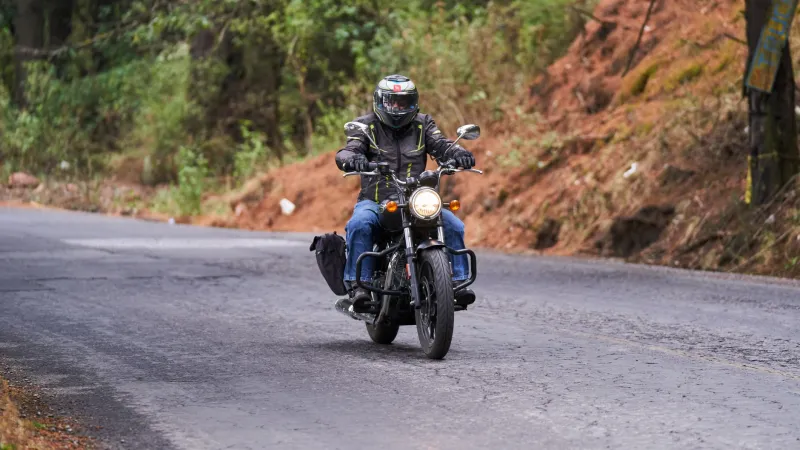
Winter does not switch the sun off. It just lowers the angle until every eastbound morning and westbound afternoon feels like someone is holding a torch six inches from your visor. For a club that likes to keep riding through the cold months, that is not a reason to cancel the run. It is a reason to plan the run a little more carefully.
North Downs & Yarrow MCC has always been at its best when the answer is practical: a decent briefing, a sensible route and nobody pretending they can see through a wall of glare. The low sun is predictable. Treat it like weather, not like bad luck.
The sun has a route plan too
In the UK, the winter sun sits low in the south. It rises somewhere southeast, arcs briefly and weakly across the day, and sets somewhere southwest. That means the worst glare usually arrives when you are heading east in the morning or west in the afternoon. A route that feels innocent on a map can put the whole group straight into the sun for mile after mile.
When you are putting a winter run together, look at the direction of the main legs before you look at the café. If the route has a long westward A-road stretch at three in the afternoon, ask whether it can be moved. Sometimes the answer is a different road. Sometimes it is a different time. A slightly earlier lunch stop or a loop that runs north-south during the worst of the glare can make the difference between a pleasant run and a procession of squinting riders.
Do not assume hedges will save you. By midwinter the lanes are bare, and a hedge that looks thick in June is a set of twigs in December. Woodland cuttings and built-up sections can help, but they are not a plan on their own. If you are leading, recce the route at roughly the time you will ride it. The sun at nine in the morning is a different animal from the sun at eleven.
Brief the group before the first junction
A low-sun briefing does not need to be a lecture. At the meet, the ride leader can simply say where the glare is likely to be, which stretch needs bigger gaps and where the next regroup is. That one sentence changes the way people ride. It gives everyone permission to back off rather than feel they are holding the group up.
Use the drop-off system with glare in mind. A marker needs to be visible, and that means standing well back from the junction, not directly in line with a low sun. If a marker cannot see the road clearly, the junction is not a good place to mark. The leader should also avoid waving the group through a turn when the oncoming view is washed out. A few seconds of waiting is cheaper than a repaired fairing.
The tail end rider needs to know the score as well. If the group strings out because everyone is struggling to see, the tail should not be left guessing whether the run has split. Agree the next regroup point at the briefing, and keep it short enough that nobody feels abandoned.
Visor, screen and the fine art of seeing
Glare is worse when it has something to bounce off. A dirty visor turns a low sun into a starburst. Clean the outside with water and a microfibre cloth, and clean the inside properly too, especially if you run a Pinlock. Scratches are the enemy here: a visor that is merely tired in daylight can become genuinely dangerous when the sun is straight ahead.
Carry a clear lens if you wear sunglasses, and do not rely on a dark tint that leaves you blind at dusk. A helmet peak can help if you have one, but do not ride with your hand up as a permanent sun visor. If the glare is that bad, slow down, change your position in the lane to find a bit of shade or shadow, and pull over if you need to. There is no prize for pressing on through a whiteout.
Keep the bike's screen clean as well, inside and out. A smeared screen scatters light in exactly the wrong direction. The same goes for sat nav screens: turn the brightness down if it is reflecting back at you. Small things, but they add up when the sun is low.
Space is a safety tool
In normal conditions, a couple of seconds between bikes is fine. In low sun, stretch it. Four seconds or more gives you time to react when the rider ahead becomes a silhouette and the road surface disappears into a bright smear. It also gives the group room to spread out rather than bunching up at exactly the moment everyone is least able to see.
Staggered formation can help, but it is not a magic trick. If the sun is directly ahead, the rider in front may be invisible no matter how neatly you are offset. If the sun is behind, assume the driver coming up behind you has not seen you either. Check your mirrors, signal early and give yourself an escape route. Bright clothing and a working headlight help, but they do not make you invincible.
Overtaking into a low sun is usually a bad bargain. So is filtering through traffic when every windscreen is flaring. The club run is not a race, and a five-minute delay is better than a close call that nobody wants to explain at the next meet.
When the lane disappears
Wet roads make low sun worse. The surface turns into a mirror, tree shadows flicker across the lane and the edge of the road can vanish entirely. That is the moment to knock the pace back and look for the bits you can actually read: the verge, the white line, the shape of the bend, the vanishing point. If you cannot see, do not guess.
The leader should build in safe stopping places, not just scenic ones. A lay-by with a good entry and exit is worth more than a pretty viewpoint on a blind bend. And if someone pulls over because the glare has beaten them, the group waits. That is not mollycoddling. It is how a club keeps its members coming back in February.
Small kit, simple habits
A microfibre cloth, a small spray bottle of water, a spare clear lens and a quick check of the visor before setting off will cover most of it. Add a sun note to the route card, mention it at the briefing and remind the tail end rider where the regroup points are. None of this is expensive or complicated.
Most of all, build the habit of talking about glare before it happens. A club that plans for the low sun is not being fussy. It is just reading the road ahead, the same way it reads a damp patch or a blind crest. The sun will not shift for us. But with a bit of thought, it does not have to stop the run.