The Lane Speaks First: Reading North Downs Surfaces Before the Club Rolls
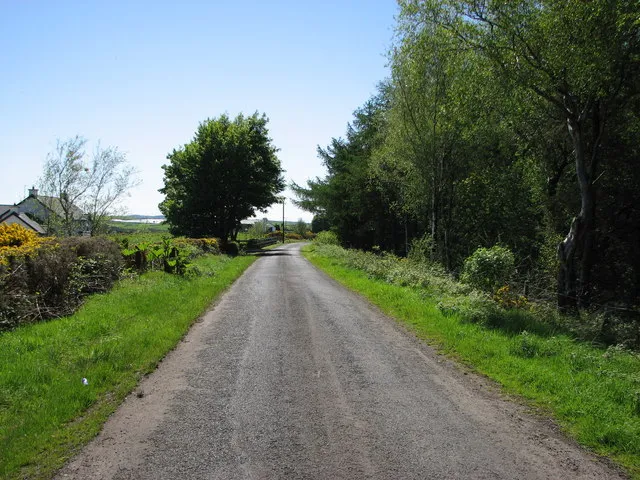
Photo: Willie Duffin, CC BY-SA 2.0, via Wikimedia Commons
Somewhere between Merstham and Oxted there is a lane that goes white for twenty metres after rain. It looks like a dusting of frost. It is not. It is chalk wash, and if you meet it mid-bend with a fistful of front brake you will find out exactly how little grip a North Downs lane can offer. The club run that day had a leader who knew the lane, and a hand went down before the white patch. Everyone slowed, sat up and rolled through. That is the whole art of it: the lane speaks first, and the good ride leader translates.
This is not about riding timidly. It is about reading the surface ahead of the group, calling what you see in plain language, and adjusting pace and spacing before the road asks you to. North Downs lanes are not difficult, but they are varied, and the variety is the point.
Start with what the lane is made of
The Downs are chalk under a thin skin of soil and flint. That combination explains most of what you will meet. Chalk holds water and turns slick when wet. Flint is sharp, and it gets dragged onto the surface by farm traffic, weather and the slow erosion of verges. Add in a bit of tar, a lot of leaves, and the occasional field gateway, and you have a surface that changes character every few hundred metres. Treat the lane as a living thing rather than a fixed circuit and you are already halfway to a safer run.
The five clues worth calling out
A useful pre-ride briefing does not need to catalogue every hazard in Surrey. Five surface clues cover most of it, and they are easy to remember when you are clipped in and Coldharbour is still twenty minutes away.
Chalk wash. Look for pale streaks or broad whitish patches, usually in hollows, on bends, and wherever a field drain has emptied across the lane. Dry, it is merely dusty. Damp, it behaves like wet soap. The correct response is gentle: upright, no sudden braking, no leaning, no throttle. If you must slow, do it before the patch, not on it.
Flint scars. These show up as broken verges, freshly ploughed field edges, and pale grey stones scattered across the tarmac. The sharp ones punish a front tyre that is already tired. Keep off the gutter line, ride a metre further out where it is safe, and do not brake hard across a scatter of stones. If someone in the group is on a bike with a light front end, give them room.
Tar snakes. On warm days, or after a damp morning, the tar in old repairs bleeds and turns shiny. These black lines can be surprisingly slippery when cold or wet, particularly in the shade of a high bank. Cross them upright, avoid hard acceleration or braking on them, and do not treat a tar snake as a racing line.
Leaf mulch. By November the lanes above Mickleham and Ranmore are carpeted in places, and wet leaves on chalk are a genuine hazard. They tend to gather on the outside of bends and under trees where the sun never reaches. Reduce lean, keep the bars still, and expect the surface to be worse than it looks.
Farm mud and horse muck. A field gateway is a warning sign in itself. Slurry dragged onto the lane can be inches deep and it behaves like ice. Horse muck is less dramatic but still greasy when wet. Treat both with respect, keep off the crown if the mud is spread across it, and remember that the stuff spreads for a good fifty metres past the gate.
The edges matter too
Beyond those five, glance at the verges. Fresh hedge clippings are slippery and can hide a pothole. New surface dressing means loose chippings, so widen the gaps and avoid sudden inputs. Standing water at the bottom of a dip may be hiding a broken drain. Cattle grids on common land deserve a straight line and a light touch. And after a frost, expect the worst potholes to have grown.
Turn it into a thirty-second briefing
You do not need a clipboard. At the meet, before helmets go on, the leader can cover four things in half a minute: the surfaces likely on today's route, the pace, the spacing, and where the first regroup sits.
Be specific. Saying it is a bit greasy out is not a briefing. Saying there is chalk wash on the climb out of the village, flint on the left after the farm, and we will regroup at the top of the second hill is a briefing. Members can then ride with the same picture in their heads.
Agree a small set of signals. A hand patting the air means slow down. A point at the road surface means look at what is coming. A raised hand means stop. Keep them simple and use them early, not as an apology.
Call the regroup before the lane gets ugly
This is the part leaders learn the hard way. The best place to regroup is before the difficult section, not after it. Pick a spot that is visible, flat and safe to pull onto, and say so in the briefing. If the lane narrows, the surface changes, or the group starts to string out, stop while everyone is still comfortable. A regroup on your terms costs two minutes. A regroup because someone has gone down costs the morning.
Spacing and pace, not speed
On a narrow North Downs lane the leader sets the pace and the second rider sets the spacing. Leave at least two seconds in the dry, three in the wet or when the surface is mixed. Ride single file through blind bends and never overtake the leader into a corner, however tempting the straight looks. If you cannot see the rider behind, ease off. The lane dictates the pace; the schedule does not.
The aim is not to crawl about, but to arrive with everybody still in the same mood they left in. A club run is judged at the tea stop, not at the top of the hill.
The short version
Read the surface, say what you see, adjust before you have to, and regroup on the good ground. The lanes will still throw something unexpected at you, because that is what lanes do. But a group that has been briefed properly will meet it calmly, and nobody will spend the next club night telling a story about a flint.