The Ride Home Is Still the Run: Closing Out a Club Night Properly
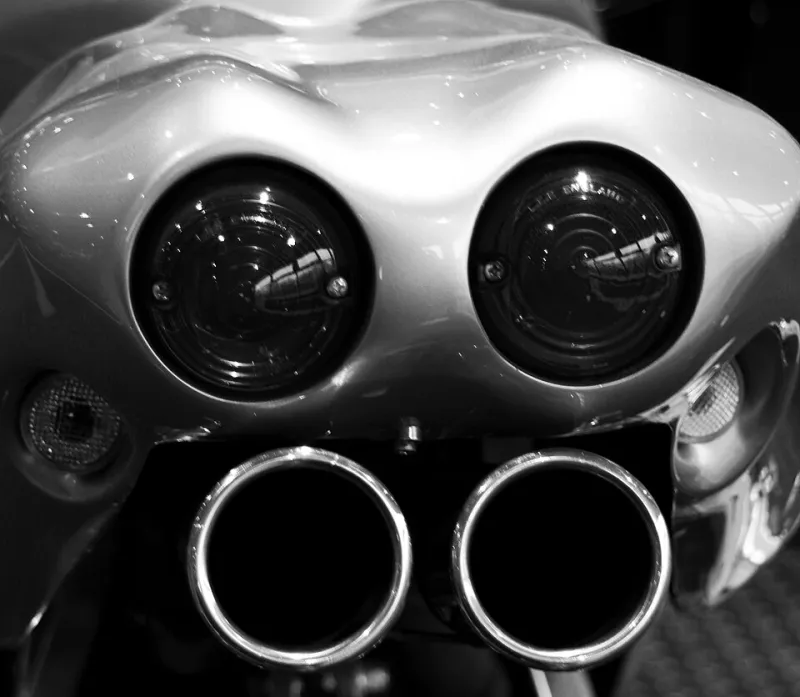
Photo: Tony Hisgett from Birmingham, UK, CC BY 2.0, via Wikimedia Commons
There's a moment on every club night that nobody plans for. The teas are finished, the gloves are back on, someone's still doing up a jacket zip, and then the car park empties in ones and twos over about four minutes. By the time the last engine fires up, half the group is already a mile down the road and nobody is entirely sure who's behind whom.
That's the gap this article is about. We spend ages on the meet, the route and the café stop — quite rightly, because that's the fun bit — and then we treat the ride home as admin. But the ride home is where the light fades, where the temperature drops, where the group naturally splits and where tiredness does its quiet work. So we've started closing out club runs the way we open them: with a short brief and a couple of simple rules.
The brief that takes ninety seconds
Before anyone pulls their gloves on, we do a quick round of the table. Three questions only.
- Fuel — who's marginal? A bike with a 12-litre tank that's been sat at 30mph on wet B-roads is not in the same position as a big tourer. If two or three people are into their reserve, we agree a fuel stop there and then rather than hoping.
- Direction — who's peeling off where? A nod at a roundabout is fine in daylight and useless at half past four in November.
- Tail-end — who's got it, and who's got the tail-end's number.
That's it. Ninety seconds, one cup of tea's worth of attention, and the whole thing changes.
Fuel is the quiet killer
Most of our trouble over the years has come from fuel, not from riding. People assume everyone has enough to get home, everyone assumes the same thing about everyone else, and then someone is on a reserve light on an unlit lane with a petrol station that shut at six.
Our rule now is simple: if the next 24-hour forecourt isn't certain, we fill up at the café or at the last town before the lanes. It costs five minutes and removes a whole category of problem. And if you're the one who's marginal, say so at the brief. Nobody has ever been mocked for admitting a small tank. People have been mildly annoyed at being stranded, though.
Name the tail-end — and name a second
The tail-end rider isn't the slowest person in the group. It's a job, and it should be rotated so it doesn't always land on the same two patient souls.
The brief is straightforward: stay behind everyone, don't overtake to catch up, and if the group strings out, sit at the next agreed point until the last rider is through. The tail-end carries the route and has the numbers of everyone likely to peel off early. And — this is the bit we added this year — someone is named as the tail-end's tail-end. Usually whoever lives closest to them. That person's job is to notice if the sweeper hasn't checked in.
Agree the regroup points before you need them
On the way out, regroup points are obvious: junctions, lay-bys, the top of a hill. On the way home, in the dark, they stop being obvious, because everyone is on their own mental map.
Pick two or three named places — the garage on the A25, the roundabout before the dual carriageway, the lay-by past the last village — and say them out loud at the café. Not "we'll regroup somewhere after the lanes." Somewhere is not a place. A named place is a place.
Say when you're peeling off
This is the one that causes the most confusion and takes the least effort. If you're turning off, tell the person behind you. Not a wave at the last second, not a flash of a brake light — a clear indicator, well before the junction, plus a glance in the mirror to check it's been seen.
The tail-end needs to know the group is now one shorter. Otherwise they spend the next three miles wondering whether they've lost someone, and the whole ride gets slower and more anxious for no reason.
The last twenty minutes are the dangerous ones
It's worth saying plainly: the final stretch is where people relax too early. Cold tyres, cold road, wet leaves in the gutter, a low sun that's suddenly directly in your visor, and a brain that's already putting the kettle on.
Our habit now is to knock the pace back a notch for the last few miles rather than winding it up. Nobody's ever complained about arriving home two minutes later. Plenty of people have complained about a moment on a greasy roundabout at the end of a long day.
The "I'm home" message
This is the bit that makes the whole protocol work, and it costs one word.
When you get in, put a message in the group chat. A single word — home, in, landed — is enough. No essay required, no need to describe the ride. What it does is let everyone else stop counting.
The tail-end confirms last. And if someone hasn't checked in within about half an hour of when they should have, the person who has their number rings them. Not messages them. Rings them. Nine times out of ten they're in the shower or eating toast in their socks. The tenth time is the reason we do it.
Keep it short enough that people actually do it
A protocol that needs a laminated card won't survive a wet Tuesday in February. Ours fits on the back of a beer mat: fuel check, name the tail-end, name the regroup points, say when you peel off, message when you're home.
It isn't bureaucracy. It's just the same care we show on the way out, applied on the way back — because a club run doesn't end at the café car park. It ends when the last sidestand goes down in somebody's own garage, and everybody knows it did.