When the Ride Stops Early: Packing the Club Incident Pouch You Hope Never to Open
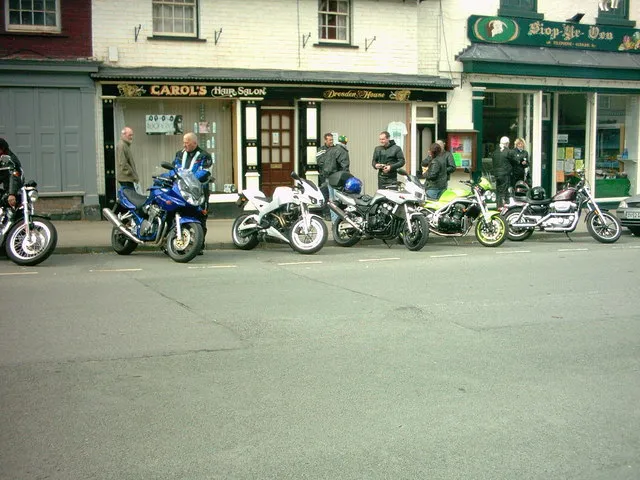
Photo: Hefin Richards, CC BY-SA 2.0, via Wikimedia Commons
Nobody joins a motorcycle club for the paperwork. We join for the early start, the smell of a two-stroke warming up in a lay-by, the bacon roll at the halfway point and the argument about whether that was really a 40 limit. But sooner or later, on some grey Sunday, a run stops being a run. A front end washes out on a damp roundabout near Sevenoaks, a rider clips a kerb on a B-road lane, a bike goes down at walking pace and suddenly eleven people are standing in the road doing a very good impression of people who have never met.
That is the moment the club needs a plan, not a debate. Not a clipboard that gets waved about officiously, either — just a small, boring pouch and a short list of things everyone has quietly agreed to do. We call it the incident pouch. It lives in the top box of whoever is leading the run, and in three years of North Downs & Yarrow MCC Sundays it has been opened twice. Both times, it earned its keep.
Why bother with a kit at all?
Because phones die, hands shake, and the human brain is terrible at remembering a postcode when a mate is sitting on a grass verge with a broken collarbone. Because the first five minutes after a bike-down are chaos, and chaos is expensive. And because the difference between a bad hour and a bad story is usually nothing more than somebody knowing what to do next.
There's a second reason, and it's less noble. A club that handles a prang well keeps its riders. A club that handles one badly — where the injured rider spends the next fortnight chasing people for phone numbers and the rest of the group bickers about whose fault it was — loses them. We'd rather spend thirty quid on a hi-vis vest than lose a member over a misunderstanding.
What actually goes in the pouch
The whole thing fits into an A5 zip pouch, the sort you'd buy for a school pencil case. Keep it waterproofed with a sandwich bag inside. Here's what earns its place:
- Two ICE cards per regular rider. Laminated, with an emergency contact name, number, and any relevant medical note (allergies, medication, a heart condition) on it. One goes in the rider's jacket pocket, one in the pouch, so the information exists twice.
- A printed callout tree. One side of A4, laminated, listing the club's three first-call contacts in order, plus the nearest A&E for each of our usual run areas. No QR codes — this needs to work when the signal doesn't.
- Witness sheets. Half a dozen pre-printed forms with space for name, address, phone, vehicle registration and a short description. Nothing fancy. But if a third party is involved, you want their details on paper before anyone's phone battery gives up.
- Detail-swap cards. Small cards with fields for insurer, policy number, registration and a sketch box. This is not a claims form. It's a way of not losing information, and there's a difference.
- Two hi-vis vests and a folding warning triangle. Cheap ones. Fluorescent yellow, not fashionable black. If the bike is down on a blind bend, subtlety is not the priority.
- A basic first-aid kit, plus two foil blankets. We don't expect members to be medics. We expect them to keep someone warm and still until a medic arrives.
- A compact torch, a marker pen, a roll of gaffer tape and a small notepad. The tape is for securing a broken indicator or holding a pannier lid shut. The notepad is for writing down what happened while it's still fresh, in plain language.
- A card with the club's insurance position and a note on what not to say. More on that below.
The callout tree: who rings whom, and in what order
This is the bit people resist, because it feels bureaucratic. It isn't. It's just an agreement that stops four people ringing the same person at once while nobody rings the one who matters.
The order we use, in plain terms:
- The rider on the scene. If anyone is hurt, someone dials 999 immediately. That overrides everything else. One person, one phone, one call, and they say clearly where they are and what's happened.
- The ride leader. They stop the rest of the group, get them off the carriageway and into a safe huddle, and take charge of the scene. They are the only person who needs to be doing anything at this point.
- The club's road captain. One call from the leader, with the postcode and a one-line summary. The road captain then makes the next calls: the injured rider's ICE contact, and — if a bike needs recovering — the transport contact.
- The sweep rider. They hold the rear, keep the group together, and make sure nobody wanders off to be helpful in a way that isn't.
We print this ladder on a card and read it out at the start of every run that has more than six bikes on it. It takes forty seconds. Nobody minds.
The first ten minutes, in order
If a bike goes down on a club run, this is the sequence we've settled on after arguing about it over several kettles:
Stop the ride safely. Indicator on, pull over properly, get the group off the road. The leader should park to protect the scene if possible, but not so close that they become part of it.
Check the rider before the bike. Always. A bent lever is a bill. A bent rider is a person. Ask them their name, ask them where it hurts, and if there's any doubt about head, neck or back, keep them still and warm until the professionals arrive.
One person talks to the emergency services. Just one. Everyone else stays quiet in the background so the call is clear.
Photograph the scene before anything is moved. Whole-bike shots, close-ups of damage, the road surface, the position of any other vehicle. Time-stamped on a phone is fine.
Collect witness details using the sheets — even if there's no third party involved. A passer-by who saw the front wheel go is worth more than three riders who were looking at the scenery.
Swapping details without becoming an insurance investigator
Here's the line we hold, and it's worth saying out loud at the start of every season: we are riders, not loss adjusters. When details get swapped, we exchange facts quietly and without commentary. Name, address, phone, insurer, policy number, registration. A short description of what each person saw. Then we stop.
What we don't do is speculate about fault on the verge, in the group chat, or on the club Facebook page. We don't say sorry as an admission of anything — a sympathetic 'are you alright?' is not a legal statement, but 'that was entirely my fault' very much can be. And we don't let the social secretary turn into a claims handler. If a member wants help with a claim, they ask, and a couple of our lot have been through it and are happy to talk. That's a favour, not a club service.
Getting bike and rider home
The last part of the callout tree is the one that gets used most often, and it's the least dramatic: recovery. A list of two local transport firms who'll take a motorcycle at short notice, with rough prices, kept on the laminated sheet. Not an insurance policy — just a phone number that saves someone an hour of panicked searching on a wet verge.
For the rider, the plan is simpler. Somebody drives them home. Not rides — drives. If they've had a knock, they shouldn't be on two wheels for the rest of the day, even if they insist they're fine. We've all seen the rider who says they're fine and then goes white in the café car park an hour later.
Practising, lightly
Once a year, at the spanner clinic, we tip the pouch out on the bench and check it. Have the ICE cards been updated? Is the first-aid kit still in date? Did somebody nick the torch? It takes fifteen minutes and it's less boring than it sounds, mostly because it turns into a conversation about the runs we've done and the ones we'd rather forget.
The pouch is never going to be the fun part of a club. But it's the part that means a bad Sunday stays a bad Sunday, and not the story that ends a friendship. If your club runs without one, put it on the agenda for the next meet. Bring a zip pouch and a marker pen. You'll be surprised how quickly the rest fills itself in.