The Locked Cabinet and the Open Shelf: Rules for a Club Tool Library That Works
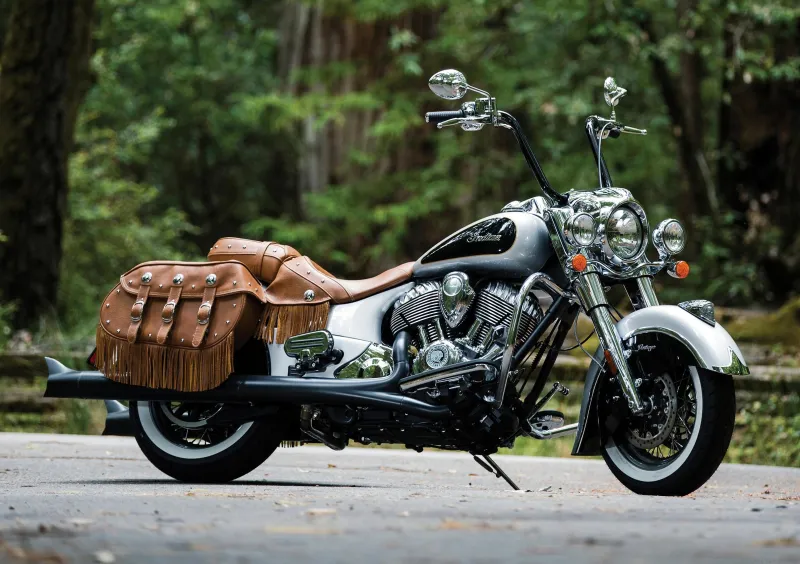
Photo: motorcycle workshop pegboard tools torque wrench garage UK, via www.dsf.my
Every club reaches the same point. Someone's doing a chain and sprocket in a cold garage and hasn't got a 32mm socket. Someone else has a clutch holding tool that's been used twice in a decade. A third has a decent compression tester and no intention of using it before spring. Between you, you own everything. Separately, you own half of nothing.
A club tool library fixes that. It also, if you're careless, ends friendships, because tools are oddly emotive objects and people are strangely bad at returning them. We've run a version of ours for a few winters now, made most of the obvious mistakes, and here's our position: lend generously from a small open shelf, guard the rest jealously, and write the rules down before you need them.
Start with the cabinet, not the spreadsheet
The temptation is to build a catalogue first. Don't. Build two physical spaces first — a shelf anyone in the club can borrow from, and a locking cabinet that needs a signature — and the policy writes itself. Every argument we've had about the library has been an argument about which pile a thing belonged in, and the answer is usually visible once it's in front of you.
The second rule is duller and more important: the club owns the tools, not the person who donated them. If a donated item goes missing, it's the club's loss and the club's decision. The moment lending becomes a personal favour, no one wants to be the one chasing.
What goes on the open shelf
Anything cheap enough that losing it costs less than the awkwardness of asking. Socket sets in common sizes, spanners, Allen keys, a breaker bar, axle stands, a paddock stand, tyre levers, a decent trolley jack, a set of picks, cable ties, a head torch, oil drain trays, funnel set. The stuff you'd lend a neighbour without thinking about it.
Open shelf means open shelf: no booking, no deposit, no diary, just a note on the clipboard and back within a fortnight. Friction kills these schemes. If borrowing a 10mm spanner requires a form and a phone call, people buy their own and the library dies.
What stays behind the lock
Torque wrenches. Diagnostic gear. Anything with a calibration certificate, a laptop attached to it, or a replacement cost that would need a committee vote. That means the good 3/8 torque wrench, the 1/2 one for axle nuts, the compression tester, the multimeter with the decent leads, any OBD or manufacturer-specific diagnostic kit, the bearing press, the valving tools and the impact gun with its impact sockets — which, incidentally, should never, ever be used on the open-shelf chrome sockets by anyone, for any reason.
Behind the lock also means: signed out, dated, named, and due back by a stated day. Not because we distrust people, but because a torque wrench that vanishes for four months is a torque wrench nobody can use, and the whole point is utilisation.
Torque wrenches, diagnostics and the trust problem
This is where clubs fall out with each other. Two things matter.
First, treat torque wrenches as instruments. Wind them back to zero before they go away, keep them in their cases, don't drop them, and don't lend them to the bloke who uses one as a breaker bar. If a wrench has been dropped or abused, it goes out of circulation and gets checked — a club can usually borrow or buy a cheap calibration check for the money it saves on a stripped sump thread.
Second, be honest that diagnostic gear has a different risk profile. A scan tool can brick a module in the wrong hands, and a laptop full of software is not something to hand out with a shrug. Our line: diagnostic kit is loaned to named members who've been shown how to use it, on a bike that's already running, and never to a stranger who's just joined to borrow a code reader for a van.
Consumables, deposits and the money question
Consumables aren't loans. Oil, brake cleaner, threadlock, copper grease, latex gloves, rags, cutting discs and drill bits get used up, and someone has to pay for them. Keep a tin with a price list taped inside the lid and a card reader or a QR code beside it. Two quid in the tin for a can of brake cleaner is not petty; it's what keeps the shelf stocked without a whip-round every six weeks.
On deposits: use them for the locked cabinet only, and keep them small enough to be painless. A £20 note held against a diagnostic tool works. A £200 deposit for a bearing press means people stop borrowing it. Our compromise is a members-only cabinet with a modest deposit and a named guarantor — someone in the club who'll vouch that you're good for it.
Damage, honesty and the awkward conversation
Write this down now, in plain English, while everyone's still friends: wear and tear is expected, abuse is not, and breakages get reported the same day.
Here's the test that's served us well. If a tool fails in normal use, that's the club's problem and the club fixes or replaces it — no blame, no invoice. If a tool comes back with a chewed socket, a bent extension or a snapped lever, that's a conversation, and usually the right answer is a contribution rather than a ban. The person who tells you immediately is the person you want to keep. The person who quietly puts it back on the shelf is the one who costs you the scheme.
Housekeeping that keeps it friendly
A few small habits keep the goodwill topped up.
- A whiteboard by the cabinet, not an app. Names, dates out, dates due. Visible, low-effort, unignorable.
- A monthly ten-minute sort-out at a club night: charge the battery packs, check the torque wrenches are zeroed, restock the consumables tin, photograph what's missing.
- A named keeper of the keys, and a deputy. One person doing everything is how these schemes quietly stop.
- A hard rule that borrowed kit comes back clean and complete. Sockets go back in the right place, not in a bucket.
The tool library isn't really about tools. It's the easiest way a club has of turning a shared interest into a shared workshop — the bloke who's never taken a wheel off learning from the one who's rebuilt three engines, on a Saturday morning, with the kettle going and a decent breaker bar within reach. Get the cabinet right and that happens on its own.